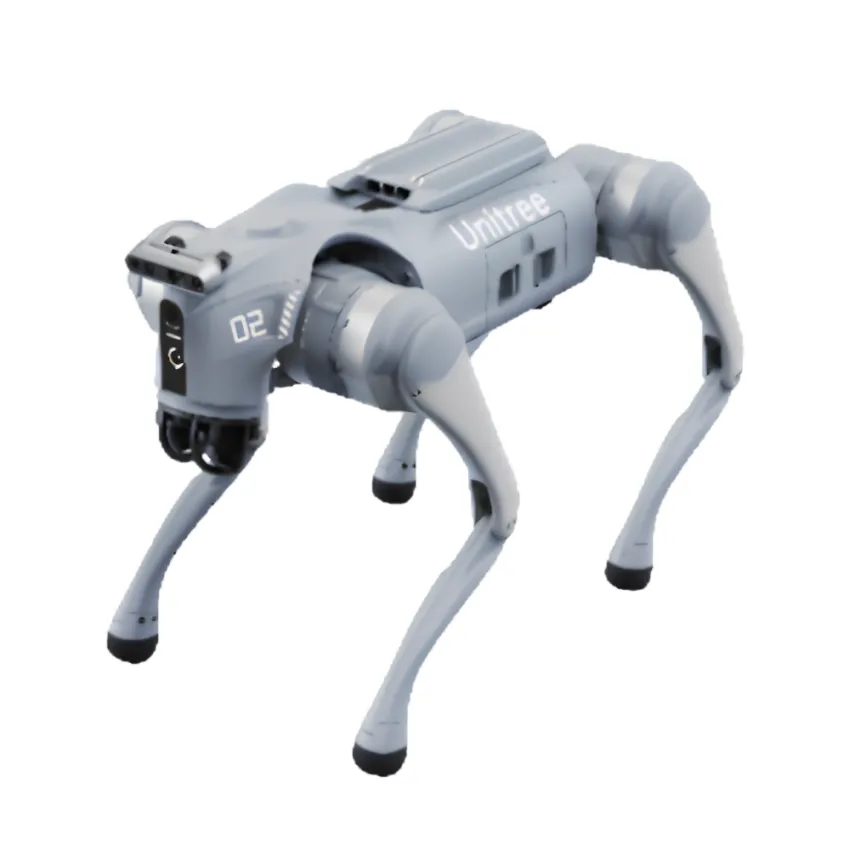
The Unitree Go2 EDU is a programmable quadruped robotics platform developed for universities, research laboratories, AI development, robotics competitions, and advanced education.
All Go2 EDU models share the same core platform, including a long-life 15,000 mAh battery, approximately 2–4 hours of runtime, advanced mobility, obstacle avoidance, depth sensing, wireless connectivity, and full secondary-development support.
Customers can select the appropriate EDU version depending on the required computing power and sensing capability.
Available Configurations:
Go2 EDU U1 – Standard
• 40 TOPS computing dock
• Intel RealSense D435i depth camera
• Secondary development supported
• Optional D1 Servo Arm
• Suitable for education, research, and general AI development
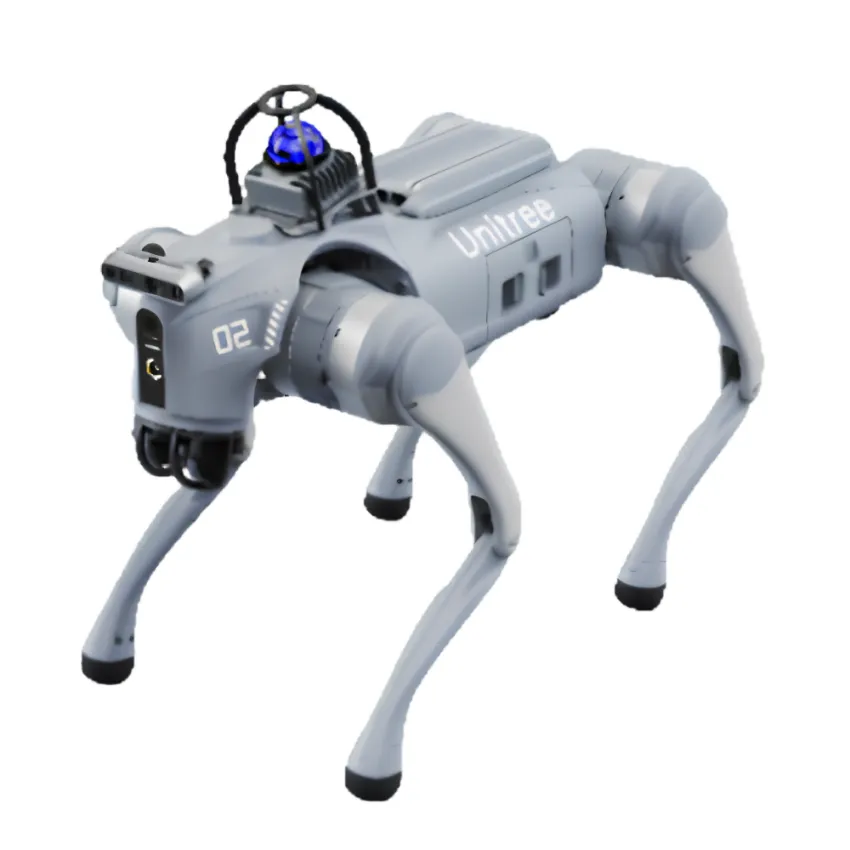
Go2 EDU U2 – Smart
• 100 TOPS computing dock
• Intel RealSense D435i depth camera
• Secondary development supported
• Optional D1 Servo Arm
• Suitable for higher-performance AI and robotics development
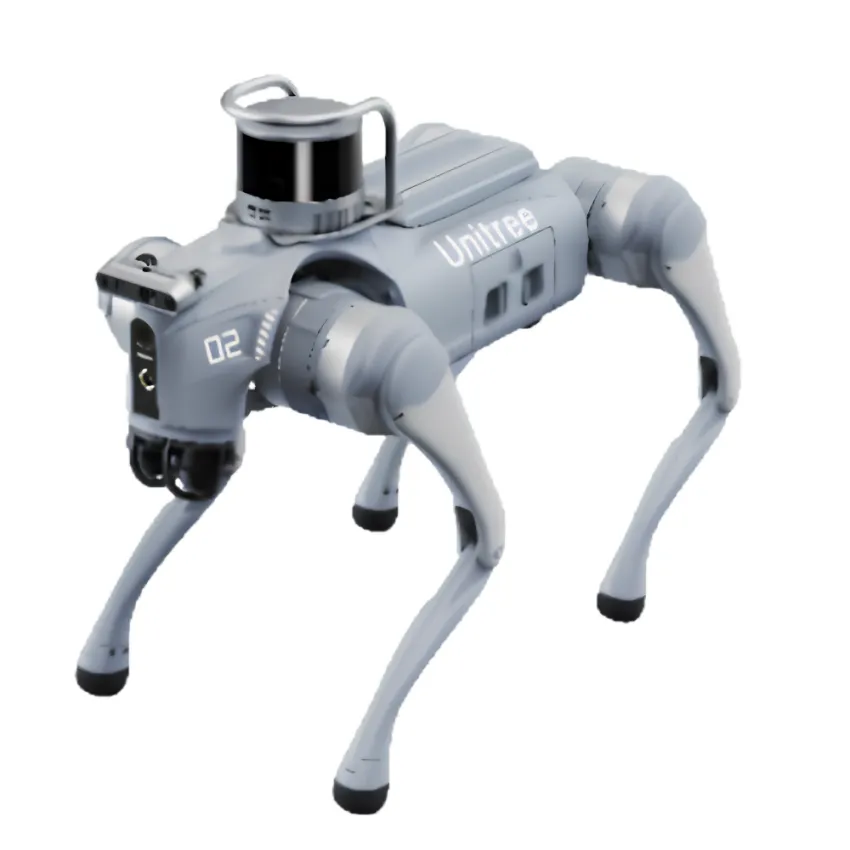
Go2 EDU U3 – Laser Smart
• 100 TOPS computing dock
• Intel RealSense D435i depth camera
• Livox Mid-360 3D LiDAR
• Navigation algorithm support up to 25 m × 25 m
• Optional D1 Servo Arm
• Suitable for mapping, navigation, and advanced perception applications
Go2 EDU U4 – Ultimate
• 100 TOPS computing dock
• Intel RealSense D435i depth camera
• Hesai XT16 3D LiDAR
• Navigation algorithm support up to 25 m × 25 m
• Optional D1 Servo Arm
• Suitable for higher-density LiDAR sensing and advanced autonomous research
Technical Specifications:
• Robot Type: Quadruped Robot
• Dimensions: Approx. 70 × 31 × 40 cm
• Weight: Approx. 15 kg
• Payload: Approx. 8 kg, up to around 10 kg maximum
• Maximum Speed: Approx. 3.7 m/s
• Maximum Slope Angle: Approx. 40°
• Maximum Climb / Drop Height: Approx. 16 cm
• Battery: 15,000 mAh
• Battery Runtime: Approx. 2–4 Hours
• Camera: Intel RealSense D435i on EDU configurations
• Connectivity: Wi-Fi 6 + Bluetooth
• Secondary Development: Supported
• Simulation Interfaces: Supported
• Optional Robotic Arm: Unitree D1 Servo Arm
Recommended Applications:
• AI and robotics research
• University laboratories
• Robotics education
• Secondary development
• Autonomous navigation research
• Mapping and perception
• Embodied AI
• Robotics competitions
• Simulation and algorithm development
• Inspection research
• Robot-arm integration
Important Note
Exact computing configuration, LiDAR, accessories, pricing, and delivery lead time depend on the selected Go2 EDU version. Please submit a quotation request for confirmed technical and commercial details.